



The ribbons on a Coast Guard uniform tell a story. But only if they’re in the right order.
Every ribbon, every medal, every decoration on that uniform has a fixed position. It’s not decorative. It’s a system precise, regulated, and steeped in over 230 years of maritime history. Get the order wrong, and it shows. Get it right, and it communicates everything about a service member’s career without saying a single word.
This is the full Coast Guard ribbon order of precedence explained clearly, organized, and sourced from the Coast Guard Medals and Awards Manual (COMDTINST M1650.25).
A quick bit of history before we get into the list
Most people know the Coast Guard as the branch that rescues boaters and busts drug runners. What a lot of people don’t realize is that the Coast Guard is actually older than the US Navy.
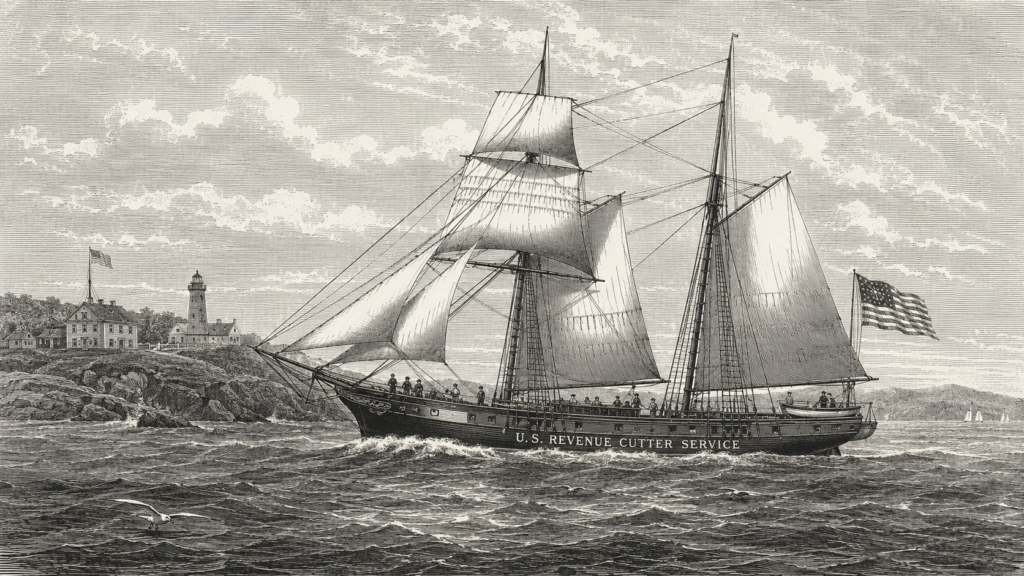
On August 4, 1790, President George Washington signed the Tariff Act into law. That act authorized the construction of ten armed vessels called cutters, and the recruitment of 40 revenue officers to patrol America’s coastlines and enforce customs laws. Alexander Hamilton, then Secretary of the Treasury, was the driving force behind it. He called for “a few armed vessels, stationed judiciously at the entrances of our ports” to serve as “useful sentinels of the law.”
That fleet became the Revenue Cutter Service, and from 1790 to 1798, it was America’s only armed maritime force. The Navy didn’t even exist yet.
Over the next century, the Revenue Cutter Service merged with several other agencies: the Life-Saving Service (1915), the Lighthouse Service (1939), and eventually the Bureau of Navigation and Steamboat Inspection Service. Each merger added new missions. Today’s Coast Guard handles law enforcement, search and rescue, environmental protection, port security, and wartime military operations all under one service.
That layered history is part of why the ribbon system exists. With so many mission types and so many decades of service, the order of precedence had to be formalized.
How the ribbon order of precedence works
Ribbons are worn in a specific arrangement on the left breast of the uniform. They go from the center of the body toward the left shoulder, arranged left to right and top to bottom in order of precedence. The highest honour sits in the top left position. Everything flows from there.
The general category order is:
- US military personal decorations
- US military unit awards
- US non-military personal decorations
- US non-military unit awards
- US military campaign awards
- US military service and training awards
- US Merchant Marine awards and non-military service awards
- Foreign military personal decorations
- Foreign military unit awards
- Non-US service awards (UN, NATO, etc.)
- Foreign military service awards
- Marksmanship awards (Navy and Coast Guard)
Within each category, individual ribbons follow a strict sub-order. That’s what the list below covers.
The full Coast Guard ribbon order of precedence
Personal decorations (highest honors)
1. Medal of Honour: The highest military decoration in the United States, awarded by the President in the name of Congress. It recognizes conspicuous gallantry and intrepidity at risk of life, above and beyond the call of duty in actual combat. Very few Coast Guard members have ever received this award, which tells you exactly how extraordinary the act has to be.

2. Navy Cross: The second-highest combat decoration in the naval services, awarded for extraordinary heroism in action against an enemy. Coast Guard members operating alongside Navy units are eligible, and it sits just below the Medal of Honor in precedence for good reason.

3. Defense Distinguished Service Medal: Awarded to senior military officers for exceptionally meritorious service in a position of great responsibility with the Office of the Secretary of Defense or a joint military activity. It’s a joint-service medal, meaning it spans all branches.
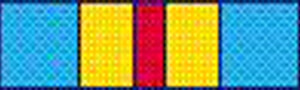
4. Coast Guard Distinguished Service Medal: The Coast Guard’s own top service award, recognizing exceptionally meritorious service to the government in a position of great responsibility. Think senior officers, major command assignments, or career-defining contributions to the service.

5. Silver Star: The third-highest combat decoration in the US military, awarded for gallantry in action against an enemy of the United States. For Coast Guard members, this typically comes from combat operations conducted alongside other branches.
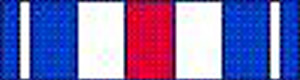
6. Defense Superior Service Medal: Awarded for superior meritorious service to a component of the Department of Defense, just below the Defense Distinguished Service Medal in the joint-service hierarchy. It’s rarely discussed but highly respected.
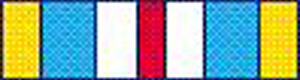
7. Legion of Merit: One of the more widely seen high decorations, recognizing exceptionally meritorious conduct in the performance of outstanding service to the United States. It can be awarded to both US and foreign military personnel.
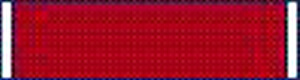
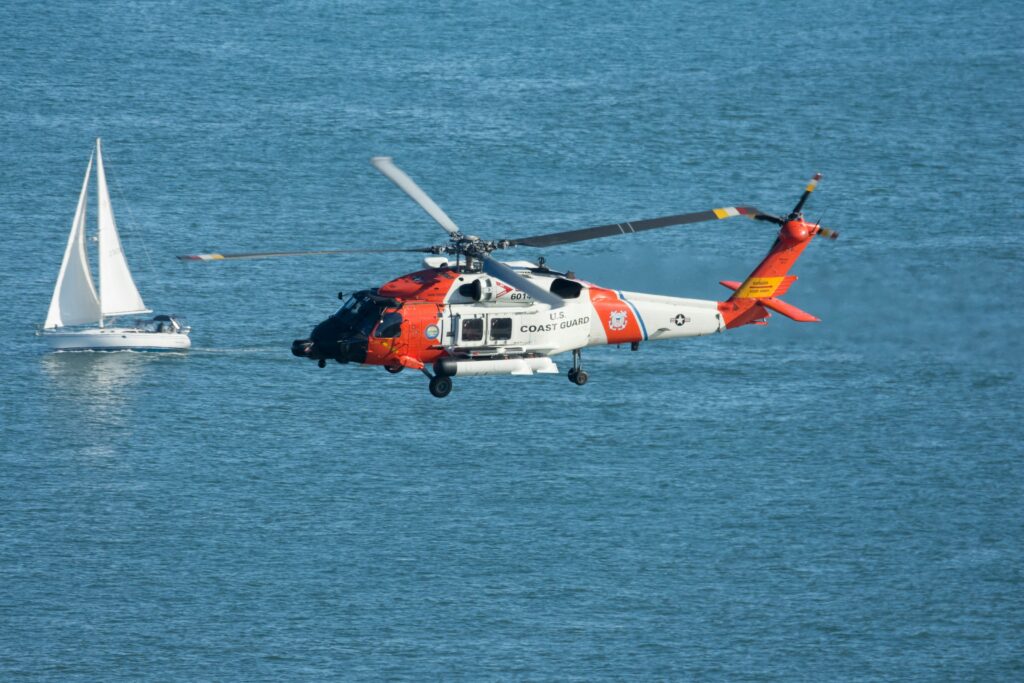
8. Distinguished Flying Cross: Awarded for heroism or extraordinary achievement while participating in aerial flight. Coast Guard aviators, helicopter rescue swimmers, HC-130 crews, and MH-60 pilots are among those eligible.
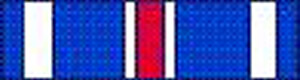
9. Coast Guard Medal: The Coast Guard’s primary peacetime valor award, given for heroism not involving actual conflict with an enemy. A Coast Guard rescuer who puts their life on the line in a brutal ocean rescue is exactly who this medal is for.
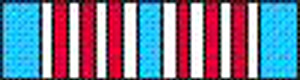
10. Bronze Star Medal: Awarded for heroic or meritorious achievement in connection with military operations against an armed enemy. When it comes with a “V” device, that “V” stands for valor meaning the act was directly combat-related.
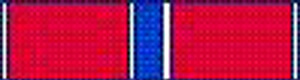
11. Purple Heart: One of the oldest and most recognized military decorations, awarded to those wounded or killed in action against an enemy. The ribbon is simple and unmistakably purple with white edges, and it carries enormous weight.

12. Defense Meritorious Service Medal: For non-combat meritorious achievement or service while assigned to a joint activity under the Department of Defense. It’s the joint equivalent of the Meritorious Service Medal.

13. Meritorious Service Medal: Awarded for non-combat meritorious achievement or service to the United States, typically for sustained performance over a tour of duty that went well above expectations.

14. Air Medal: For meritorious achievement while participating in aerial flight. Coast Guard aviation units, which handle a massive share of the service’s search and rescue operations, see this award with some regularity.

15. Joint Service Commendation Medal: Awarded for meritorious service or achievement while assigned to a joint military activity. It recognizes work that directly contributed to the effectiveness of a joint force.

16. Coast Guard Commendation Medal: One of the more commonly seen personal decorations, awarded by the Commandant for meritorious service or achievement. It can be awarded with an “O” device for operational service or a “V” device for acts involving direct hazard.

17. Joint Service Achievement Medal: For meritorious service or achievement while assigned to a joint activity, below the Joint Service Commendation Medal in precedence. It recognizes solid performance in joint-service environments.

18. Coast Guard Achievement Medal: Awarded to any member of the Coast Guard for outstanding leadership, professional achievement, and superior performance of duty in peacetime or combat situations. This is one of the more frequently awarded personal decorations in the enlisted ranks.

19. Commandant’s Letter of Commendation Ribbon: Awarded to any member who receives a written Letter of Commendation directly from the Commandant. It’s not a medal, it’s a ribbon only, but it represents a personal acknowledgement from the top of the chain.

Unit awards
20. Presidential Unit Citation (Coast Guard): The highest unit award, given to entire Coast Guard units for extraordinary heroism in action against an armed enemy. The entire unit must have performed at a level that would merit individual Silver Stars for its members.
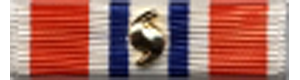
21. Coast Guard Unit Commendation: Awarded to Coast Guard units that have distinguished themselves by valorous or meritorious service. It recognizes the collective achievement of a team, not just individual members.
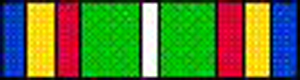
22. Meritorious Unit Commendation: One step below the Unit Commendation, this recognizes meritorious conduct in a less extreme but still notable capacity. Units that perform consistently at a high level in peacetime or operational environments often receive this.

23. Coast Guard “E” Ribbon: Awarded to units that achieve the battle efficiency standards set by the Commandant. It’s essentially a grade, the Coast Guard’s way of recognizing that a unit passed a rigorous performance evaluation.

Non-military personal decorations
24. Secretary of Transportation Award for Heroism Ribbon: Awarded by the Secretary of Transportation for heroic acts performed while serving the department, not involving direct conflict with a military enemy. This category covers the Coast Guard’s civilian-side chain of authority.
25. Department of Transportation Outstanding Achievement Award Ribbon: Recognises exceptionally meritorious conduct in the performance of outstanding services for the Department of Transportation. It sits just below the heroism ribbon in this category.
Campaign and expeditionary awards
26. Coast Guard Combat Action Ribbon: Awarded to Coast Guard members who have actively participated in ground or surface combat. It’s a rare ribbon for a service not traditionally associated with frontline combat, which makes it notable when you see it.
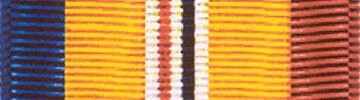
27. Prisoner of War Medal: Awarded to any member of the US armed forces who was taken prisoner of war by an enemy of the United States after April 5, 1917. The medal carries significant historical weight given its eligibility criteria.

28. Armed Forces Expeditionary Medal: For participation in specific US military operations outside the US where no dedicated campaign medal has been authorized. It’s the catch-all expeditionary medal for operations that don’t have their own ribbon yet.
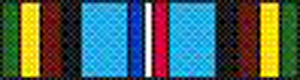
29. Vietnam Service Medal: Awarded for service in Vietnam, or in adjacent waters or airspace, between July 4, 1965, and March 28, 1973. Coast Guard patrol boats operated extensively in Vietnamese inland and coastal waters during this period.

30. Southwest Asia Service Medal: For participation in military operations in the Southwest Asia theater, primarily covering the Gulf War and related operations between 1990 and 1995.

31. Kosovo Campaign Medal: Awarded for service in the Kosovo region between March 24, 1999, and a closing date to be determined. Coast Guard personnel serving in support roles in the Balkans are eligible.

32. Afghanistan Campaign Medal: For service in Afghanistan on or after October 24, 2001. Coast Guard port security units and law enforcement detachments deployed to the region as part of Operation Enduring Freedom.

33. Iraq Campaign Medal: For service in Iraq on or after March 19, 2003. Coast Guard units deployed to Iraqi ports and waterways as part of Operation Iraqi Freedom and subsequent operations.

34. Global War on Terrorism Expeditionary Medal: Awarded for service in an area designated as a hostile environment in support of the Global War on Terrorism. It recognizes forward-deployed service in combat or near-combat conditions.
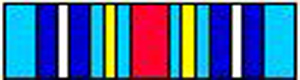
35. Global War on Terrorism Service Medal: For service in direct support of the Global War on Terrorism that does not meet the geographic criteria for the Expeditionary Medal. Stateside and support personnel are eligible.

36. Korean Defense Service Medal: Awarded for service on the Korean Peninsula on or after July 28, 1954. Coast Guard members attached to joint or combined commands in South Korea qualify.

37. Armed Forces Service Medal: For significant military activities where there is no armed conflict against an enemy of the United States. Drug interdiction operations, peacekeeping missions, and certain humanitarian operations may qualify.

38. Humanitarian Service Medal: For meritorious participation in a significant military act or operation of a humanitarian nature. Coast Guard disaster response operations, hurricanes, floods, and mass rescues are exactly what this medal was made for.

39. Military Outstanding Volunteer Service Medal: Recognizes substantial volunteer service to the civilian community by members of the armed forces. It’s awarded for sustained, long-term volunteerism over the years, not a single event.
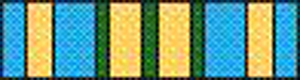
Service and training awards
40. Special Operations Service Ribbon: Awarded for significant non-combat meritorious service during a major Coast Guard operation of a special nature where no other service medal or ribbon applies. This is the ribbon that covers the operations that don’t fit neatly into other categories.
41. Coast Guard Sea Service Ribbon: Awarded to members who complete a designated tour of sea duty. For a maritime service, this one matters, it tells you someone actually served at sea, not just in an office ashore.

42. Coast Guard Restricted Duty Ribbon: For completing an unaccompanied duty tour in which dependents were not eligible to accompany the service member. It’s recognition of the personal sacrifice that comes with remote assignments.

43. Coast Guard Recruiting Service Ribbon: Awarded to any officer or enlisted member who completes a standard two-year tour as a Coast Guard recruiter. Recruiting is its own skillset and the ribbon acknowledges that commitment.
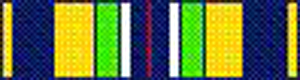
44. Basic Training Honor Graduate Ribbon: Presented to recruits who graduate at the top of their training class at Cape May. It’s the first ribbon many Coast Guard members ever earn, and it means something that not everyone makes it to the top of the class.

45. Coast Guard Reserve Good Conduct Medal: Awarded for four consecutive years of honorable service in the Coast Guard Reserve. Each additional four-year period can be recognized with a device on the ribbon.
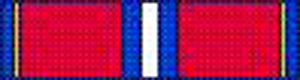
46. Coast Guard Good Conduct Medal: Awarded to active duty members for three consecutive years of honorable service with no disciplinary issues. It’s one of the most common ribbons you’ll see on a Coast Guard rack and one of the most straightforward to earn.
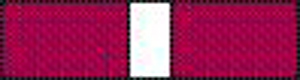
Historical service, foreign, and other awards
47. Navy Occupation Service Medal: Awarded for service in occupied territories following World War II, covering Japan, Austria, and other post-war occupation zones between 1945 and 1955.

48. China Service Medal: Awarded to Navy and Coast Guard personnel who served in the China area between July 1937 and September 1939, or between September 2, 1945, and April 1, 1957. Primarily a WWII-era and Cold War-era distinction.
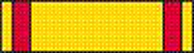
49. American Defense Service Medal: Recognizes service during the limited emergency period between September 8, 1939, and December 7, 1941 the period before the US officially entered World War II. Getting rarer as the years pass.
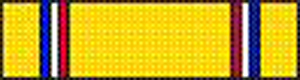
50. Women’s Army Corps Service Medal: Awarded to women who served in the Women’s Army Corps between July 1942 and September 1945. It’s an authorized Coast Guard ribbon when applicable to prior service.

51. American Campaign Medal: For service in the American theater of operations between December 7, 1941, and March 2, 1946, during World War II. Coast Guard units patrolled the Atlantic and Pacific coasts extensively during this period.
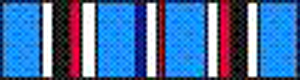
52. Asiatic-Pacific Campaign Medal: For service in the Asiatic-Pacific theater of operations during World War II. The Coast Guard served in amphibious landings across the Pacific, and this medal reflects that contribution.
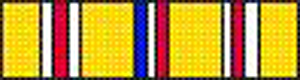
53. European-African-Middle Eastern Campaign Medal: For service in the European, African, or Middle Eastern theater of operations during World War II. Coast Guard-crewed vessels participated in the D-Day landings at Normandy this medal covers that service.

54. World War II Victory Medal: Awarded for service in the US armed forces between December 7, 1941, and December 31, 1946. Any member who served in that window, regardless of where or in what role, was eligible.

55. Coast Guard Occupation Service Medal: Specific to Coast Guard members who served in occupation duties following World War II. It acknowledges a distinct mission that followed the combat phase.
56. National Defense Service Medal: Awarded for honorable active service during a period of national emergency: the Korean War era, the Vietnam era, the Gulf War era, and the post-9/11 period. Many veterans of different generations share this ribbon.
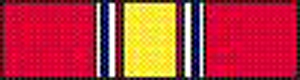
57. Korean Service Medal: For service in the Korean theater of operations between June 27, 1950, and July 27, 1954. Coast Guard personnel participated in the conflict alongside the Navy and allied forces.
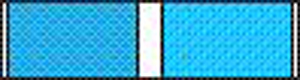
58. Antarctica Service Medal: Awarded to military members who served on the Antarctic continent or in Antarctic waters in support of US scientific operations. Coast Guard icebreakers have operated in polar regions for decades.

59. Armed Forces Reserve Medal: Awarded to Reserve members who complete 10 years of honorable service within a 12-year period. An hourglass device is added for each subsequent 10-year period.
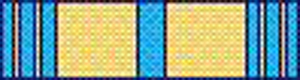
60. Coast Guard Arctic Service Medal: Recognizes Coast Guard members who complete a designated tour of duty in Arctic or near-Arctic waters. Coast Guard icebreakers routinely operate in Alaska’s northern regions, and this medal reflects that unique operational environment.

61. Merchant Marine Expeditionary Medal and other Merchant Marine awards: These awards, when authorized for wear on the Coast Guard uniform, are placed here. The Merchant Marine and Coast Guard have a long operational relationship, particularly in wartime.
62. Foreign military personal decorations (in authorized order): Foreign awards authorized for wear on the Coast Guard uniform appear here, in the order established by the awarding nation’s precedence hierarchy. They are worn after all US awards.
63. United Nations medals: UN service medals, including the UN Service Medal and the UN Medal, are worn here. Coast Guard members participating in UN-mandated operations or peacekeeping missions may be authorized to wear these.
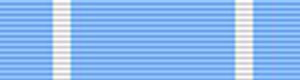
64. NATO Medal: Authorized for US military members who served in NATO operations meeting specific criteria. It falls under the non-US service awards category.
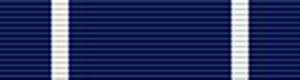
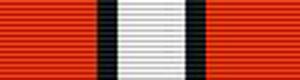
65. Multinational Force and Observers Medal: For service with the Multinational Force and Observers peacekeeping mission in the Sinai Peninsula. US military members, including Coast Guard, who served a minimum tour are eligible.
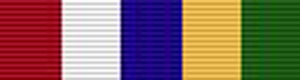
66. Inter-American Defense Board Medal: Awarded to US military personnel who served with the Inter-American Defense Board or Inter-American Defense College for a minimum of one year. It represents joint defense cooperation across the Americas.
Marksmanship awards
67. Coast Guard Pistol Marksmanship Military Ribbon: Awarded to Coast Guard members who qualify as an expert with a service pistol. Marksmanship awards sit at the bottom of the precedence order, but earning expert qualification is still a point of professional pride.

68. Coast Guard Rifle Marksmanship Military Ribbon: For Coast Guard members who qualify as an expert with a service rifle. Like the pistol medal, it represents a specific, tested skill and in an organization built on law enforcement and port security, marksmanship matters.

How to wear Coast Guard ribbons: the key rules
If you’re putting together a rack or helping someone get theirs right, here’s what you need to know.
Top row, left position first. The highest-precedence ribbon goes in the inner-top position (closest to the centre of the chest). Ribbons read left to right, top to bottom, in descending order of precedence.
Three ribbons per row. The standard arrangement is three ribbons per row. If you have a number that doesn’t divide cleanly by three, place incomplete rows at the bottom, with the remaining ribbons centred or left-aligned, depending on service policy.
Devices matter. Stars, letters, and other devices worn on ribbons have their own positioning rules. A gold star typically indicates an additional award. The “V” device denotes valor. These must be positioned correctly, usually toward the right end of the ribbon or centered, depending on the specific device.
The official reference is COMDTINST M1650.25. Commonly called the Medals and Awards Manual, that document is the final word on everything. If a ribbon isn’t on this list or you’re unsure about a device placement, that’s where you go.
Why the order of precedence matters
It’s easy to think of ribbons as just decorative, colourful strips of fabric. But in military culture, they’re read like a resume. Another service member can look at a rack and immediately understand someone’s history: where they served, what they survived, what they were recognized for.
Getting the order right is a form of respect for the awards themselves and for the people who earned them alongside you. Getting it wrong is noticeable in a way that matters to people who know what they’re looking at.
That’s why this list exists. That’s why the manual is 200-plus pages. And that’s why a service that started with ten wooden sailing ships in 1790 still takes uniform regulations seriously in 2025.
Frequently asked questions
What is the Coast Guard ribbon order of precedence?
The Coast Guard ribbon order of precedence is the official ranking that determines how ribbons and medals are arranged on the uniform. The order goes from highest military decorations (Medal of Honor first) down through unit awards, campaign medals, service awards, and foreign decorations.
What ribbon has the highest precedence in the Coast Guard?
The Medal of Honor holds the highest precedence in the Coast Guard, as it does in all US military branches. Below it is the Navy Cross, then the Defense Distinguished Service Medal, followed by the Coast Guard Distinguished Service Medal.
Where can I find the official Coast Guard medals and awards manual?
The official reference is COMDTINST M1650.25, known as the Coast Guard Medals and Awards Manual. It is available through official Coast Guard channels and governs all aspects of ribbon wear, device placement, and precedence.
How many ribbons are authorized for the Coast Guard uniform?
There is no fixed limit on the number of ribbons a member may wear, but they must all be authorized and worn in the correct order of precedence as specified in COMDTINST M1650.25.
Is the Coast Guard ribbon order the same as the Navy?
There is significant overlap, particularly for joint and campaign medals, but the Coast Guard has its own service-specific decorations (like the Coast Guard Distinguished Service Medal, Coast Guard Commendation Medal, and Coast Guard Achievement Medal) that appear in positions unique to the USCG order.
When was the Coast Guard founded?
The Coast Guard traces its founding to August 4, 1790, when President George Washington signed the Tariff Act authorizing the Revenue Cutter Service. The modern Coast Guard was officially formed in 1915 when the Revenue Cutter Service merged with the Life-Saving Service.
Build your Coast Guard Rack now on SuperThin Ribbons Rack Builder.
Sources: COMDTINST M1650.25 (Coast Guard Medals and Awards Manual); Military Yearbook Project USCG Awards in Order of Precedence; US Coast Guard Academy Historical Records; National Maritime Historical Society.