


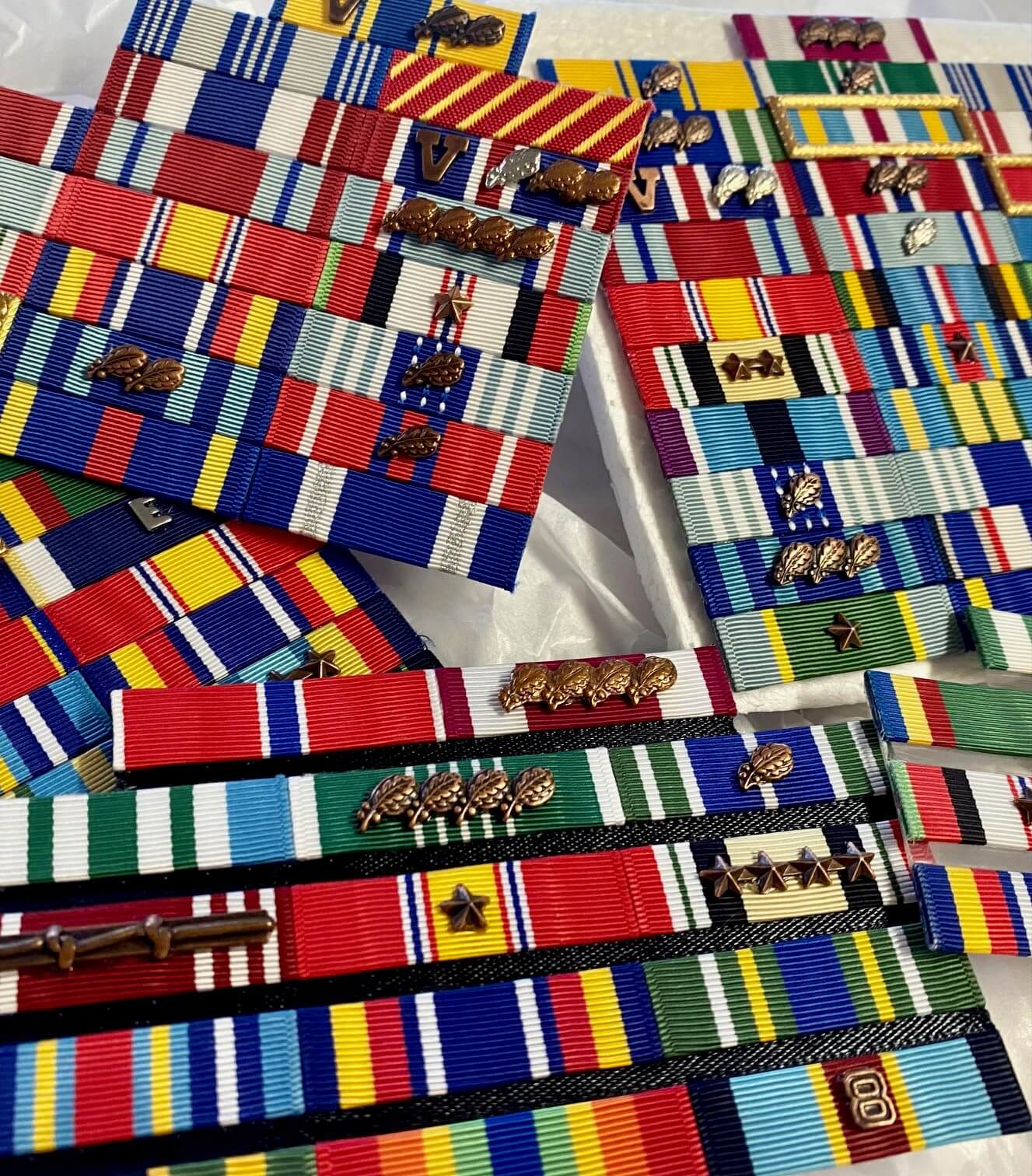
Yes. Thin ribbons are regulation-compliant across all U.S. military branches: Army, Navy, Marine Corps, Air Force, Space Force, and Coast Guard, as long as they display authorized awards in the correct order of precedence, with proper placement and accurate ribbon dimensions.
What are thin ribbons?
Thin ribbons are military ribbon racks built on a lower-profile mounting system. The ribbons themselves look identical to standard ones, same colors, same dimensions, same awards. The only difference is that the rack sits closer to the uniform instead of protruding outward.
Service members across every branch choose thin ribbons for a few straightforward reasons: they look sharper, sit flatter, reduce bulk, and feel more comfortable during long ceremonies and inspections.
Read out the difference between the thin ribbons and the standard ribbons.
What do military regulations actually require?
This is where a lot of confusion comes from. Most service members assume regulations specify how thick a ribbon rack should be. They don’t.
Across all branches, official uniform regulations focus on whether awards are authorized, the correct order of precedence, accurate ribbon colors and dimensions, proper placement on the uniform, and overall professional military appearance. Rack thickness is not a regulated measurement anywhere in official policy. What regulators care about is what your ribbons represent and how they’re displayed, not how far they project from your uniform.
Branch-by-branch breakdown
Army: AR 670-1 is the U.S. Army regulation that outlines the standards for the wear and appearance of Army uniforms and insignia, including guidelines on proper display of badges and ribbons. The regulation emphasizes that proper wear of the Army uniform is a matter of personal pride, and soldiers have an individual responsibility for ensuring their appearance reflects the highest level of professionalism. The regulation governs what ribbons represent and how they’re placed, not the thickness of the rack holding them. Thin ribbon racks are widely worn by soldiers on dress uniforms.
Navy: The U.S. Navy Uniform Regulations govern ribbon wear for all naval personnel. Ribbons are worn over the left breast pocket in all variations of the service dress uniform. The emphasis is on authorized awards, correct precedence, and placement. Thin ribbon racks that meet these standards are fully acceptable and have grown in popularity among sailors because they eliminate bulk while keeping everything inspection-ready. Wikipedia
Marine Corps: Marine Corps Order 1020.34H is the official Marine Corps Uniform Regulations document, issued by the Commandant of the Marine Corps to promulgate current policies and regulations regarding the wear of Marine Corps uniforms. MCO 1020.34H covers appearance standards, specifying how uniforms should fit, be cleaned, and presented, ensuring all Marines maintain a professional appearance. Guidelines on wearing badges, medals, and other distinctions apply to represent achievements while adhering to the uniform code. Many Marines actually prefer thin ribbon racks because they create a cleaner, more precise look on dress blues, and precision is very much a Marine Corps value. Marines
Air Force: AFI 36-2903 provides responsibilities and standards for dress and personal appearance of all Air Force personnel. It applies to all Regular Air Force, Air Force Reserve, Air National Guard, retired and separated personnel. On ribbon placement specifically, AFI 36-2903 directs that ribbons be worn centered on the wearer’s left side, parallel with the ground and aligned with the bottom of the name tag. The regulation addresses placement and authorization, not rack thickness. Thin ribbons are a common choice on service dress uniforms because they sit flat and create a clean profile. Air Force
Space Force: Space Force uniform requirements are addressed under SPFI 36-2903, which provides specific instructions regarding USSF service dress uniform requirements. On ribbons specifically, ribbons and devices will be worn on the service dress coat, centered and resting on (but not over) the edge of the pocket on the wearer’s left. Guardians wear thin ribbon racks regularly, and the same core requirements apply to authorised awards, correct precedence, and proper placement. U.S. Space Force
Check out SuperThin Ribbon’s blog on the US Space Force Ribbon Order of Precedence.
Coast Guard: Coast Guard uniform regulations under COMDTINST M1020.6 govern medals, ribbons, and awards, including manner of wear, wearing of medals, and ribbon and medal attachments. Ribbons are worn in order of precedence, high to low, from inboard to outboard, without intervals between ribbons and rows of ribbons. The focus is on accurate precedence and placement. Thin ribbon racks that meet these standards are widely worn by Coast Guard personnel. US Coast Guard.
Check out SuperThin Ribbon’s blog on the US Coast Guard Force Ribbon Order of Precedence.
Why service members prefer thin ribbons
The trend toward thin ribbons isn’t about cutting corners; it’s about sharpness.
A traditional ribbon rack can stick out noticeably from the uniform, especially for personnel with multiple rows of awards. Thin ribbon racks bring everything closer to the fabric, creating a cleaner silhouette that many service members and commanding officers consider the more professional look.
Beyond aesthetics, thin ribbons are simply more comfortable. Sitting through a two-hour ceremony with a bulky rack pressing into your chest is a minor but real irritation. A thinner profile eliminates it.
There’s also a practical argument: thin ribbon racks are less likely to catch or snag during movement, and they tend to hold their position better on the uniform throughout the day.
Frequently asked questions
Yes, when manufactured correctly. The ribbon dimensions, colors, and award representations remain identical to standard ribbons. The difference is in the mounting hardware, not in what’s being displayed.
Generally yes. Inspectors are looking at whether your awards are authorized, correctly ordered, and properly placed, not the depth of your rack.
Absolutely. Veterans, retirees, and first responders who wear military ribbons at formal events and ceremonies commonly use thin ribbon racks.
Yes. Promotion ceremonies follow the same uniform standards as any other formal military event. Thin ribbon racks are appropriate as long as the awards are accurately displayed.
The bottom line
Every major U.S. military branch regulates what ribbons represent and how they’re worn, not how thick the rack underneath them is. AR 670-1, MCO 1020.34H, AFI 36-2903, SPFI 36-2903, and COMDTINST M1020.6 all share the same core principle: proper wear, authorized awards, correct precedence, and professional appearance. None specify rack thickness. Thin ribbon racks manufactured to military specifications are a legitimate, widely worn choice across all branches.
The key is simple: make sure your awards are authorized, your order of precedence is correct, and your placement follows your branch’s uniform standards. Beyond that, a thinner rack isn’t just acceptable for many service members, it’s the sharper-looking option.
Build your ribbon rack
At Super Thin Ribbons, every rack is built to military specifications with accurate precedence, correct ribbon dimensions, and a low-profile design trusted by active-duty personnel, veterans, retirees, and first responders. Whether you’re preparing for a ceremony, promotion, inspection, or retirement, we’ll help you look sharp.
Build Your Ribbon Rack now with our easiest rack builder now!!!
To every service member, veteran, and retiree, thank you for your service. Your ribbons tell a story worth wearing proudly.